Skincare video ads have a harder job than most. They have to make a product look desirable in a few seconds, on a small screen, while staying honest about what a cream or serum can actually do. Get the look wrong and nobody stops scrolling. Get the claims wrong and the ad can be pulled. This guide covers the formats that work for skincare and beauty brands, where AI helps and where it does not, and the rules worth knowing before you brief anyone.
Why beauty ads are different
People buy skincare with their eyes and their trust at the same time. They want to see the texture, the colour and the routine, and they want to believe the person showing it. That is why the strongest beauty ads tend to combine two things: a beautiful product shot that makes the bottle feel premium, and a real-feeling moment that makes the result feel believable. Most campaigns need both, cut into short vertical versions for TikTok, Reels and Shorts.
Five formats that work for skincare
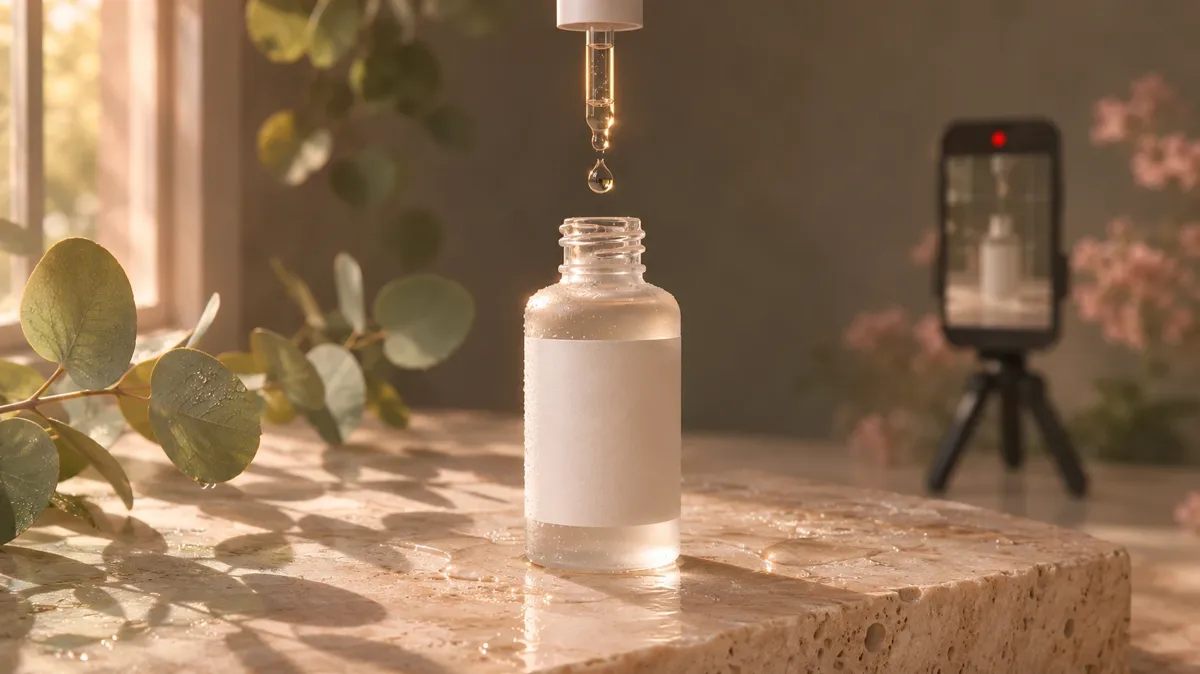
- The texture shot: a slow pour, a drop of serum, a swirl of cream on glass. It shows what the product feels like without saying a word, and it makes a strong opening frame.
- The routine: three or four steps in order, morning or evening, with each product named on screen. Good for brands with a range rather than a single hero product.
- The creator-style review: a person talks to camera about why they use it. This is the format behind most UGC ads, and it works because it feels like a recommendation, not an advert.
- The ingredient story: one ingredient, what it is and why it is in the formula, shown with simple motion graphics. Useful for brands that sell on science.
- The gift or seasonal ad: the product in a Christmas, Valentine’s Day or summer scene. These are easy to make from the same product shots you already have.
You do not need all five. One hero format, cut into several hooks and lengths, usually beats five half-finished ideas. We cover the lengths in how long should a video ad be.
Where AI helps a beauty brand
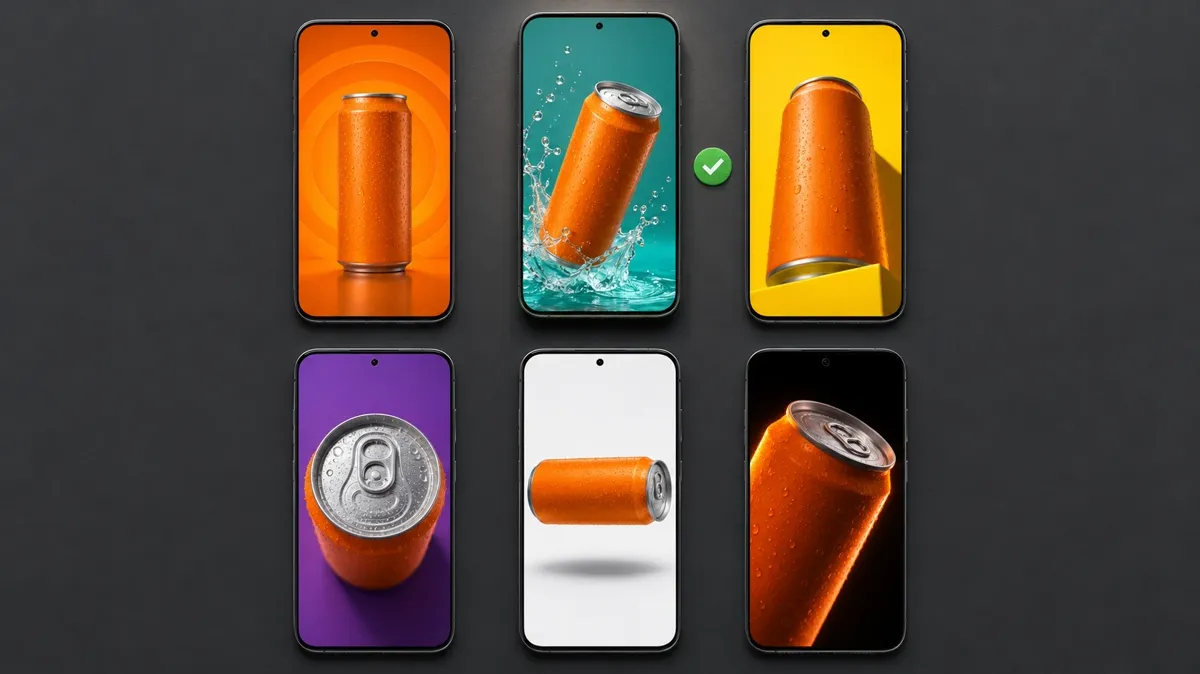
AI is very good at the scene around the product: marble bathrooms, sunlit shelves, water splashes, petals, seasonal sets. Starting from one clear photo of your bottle, an AI Product Photoshoot gives you stills, and an AI Commercial turns those scenes into a finished 30 second spot with 15 and 6 second cutdowns. For creator-style ads, AI UGC Ads give you many hooks without booking and chasing creators.
The rule we work to is simple: AI can build the world around the product, but it should not change the product or invent a result. The label, the colour and the size are rebuilt by hand to match the real bottle, and nothing is added that the customer will not receive.
Where AI should not be used
Some things in a beauty ad have to be real, because the viewer is judging them as evidence:
- Before and after results. If an ad shows what a product does to skin, the result has to be genuine and typical, not generated or retouched.
- The texture and shade of make-up on skin. A foundation shade that looks different on screen from what arrives causes returns and complaints.
- A real person’s face or likeness without their written consent. Any generated presenter should be an original face.
Where a result has to be shown, film it for real, and use AI for the rest of the ad around it.
Claims, filters and the UK rules
In the UK, beauty and skincare ads are covered by the CAP Code, enforced by the Advertising Standards Authority (ASA). Two points come up again and again. First, claims about what a product does, such as reducing wrinkles or clearing spots, need evidence the brand can show if asked. Words like “clinically proven” need real studies behind them. Second, the ASA has made clear that beauty filters and heavy retouching should not be used in ads if they exaggerate the effect of the product being sold. That applies to influencers and creators posting ads, as well as to the brand’s own videos.
This is not legal advice, and the rules change, so check the current CAP guidance for cosmetics before a campaign goes live. In practice, a careful brief avoids most problems: say what the product does in plain words, show it honestly, and keep a record of where every claim comes from.
What to send a studio
- A sharp photo of each product, straight on, in even light, plus the back label if the ingredients matter.
- Your brand colours, fonts and logo files.
- The two or three claims you are allowed to make, with the evidence behind them.
- Three ads you like, from any brand, and one you do not.
- Where the ad will run: TikTok, Reels, YouTube or your website.
There is a fuller checklist in what to send us before an AI product photoshoot.
Test more than one opening
With beauty ads, the first second decides most of the result. A texture shot, a face, a question and a bold claim can each work, and the only way to know which works for your audience is to run them side by side. That is what an Ad Variant Pack is for, and we explain how many versions to test in what is a video ad variant.
Getting started
Start with your best-selling product and one format, and see how it performs before doing the whole range. Prices are on the pricing page, and a free 15 minute call is enough to plan the first ad and get a quote.