AI video trends for 2027 are easier to call than they were a year ago, because most of them have already started. This is a working studio’s view, not a forecast from a research firm: ZR Media makes AI video ads in London every week, and these are the seven changes we are planning around for next year. Some are close to certain. Others are our best guess, and we say which is which.
1. AI in video ads stops being news
The question is moving from “should we use AI?” to “where do we use it?”. In the IAB’s 2025 Digital Video Ad Spend and Strategy report, 86% of the US ad buyers surveyed said they were using or planning to use generative AI to make video ad creative. That was a survey of buyers in one market, so treat it as a direction, not a law. But it matches what we hear on calls: in 2027 an AI-made ad will not be a talking point. It will be judged like any other ad, on the idea and the finish.
2. Longer shots with the same face and product
The weak point of AI video has been drift: a face that changes between cuts, a label that warps. Each generation of video models holds a character, a product and a set together for longer, and we expect that to continue in 2027. It will not remove the need for reference sheets and a careful edit. It will mean more of the ad can be one continuous scene instead of a run of two second shots. We explain the current routine in how we keep one AI face consistent across 30 shots.
3. Sound arrives with the picture
Several video models now generate dialogue, ambience and effects together with the image, and voice tools keep getting closer to a natural read. In 2027 we expect a rough cut to arrive with usable sound already on it. A finished ad still needs a proper mix, licensed music and a voice chosen for the brand, but the first version a client sees will feel far more complete than it did in 2025.
4. One ad becomes fifty versions
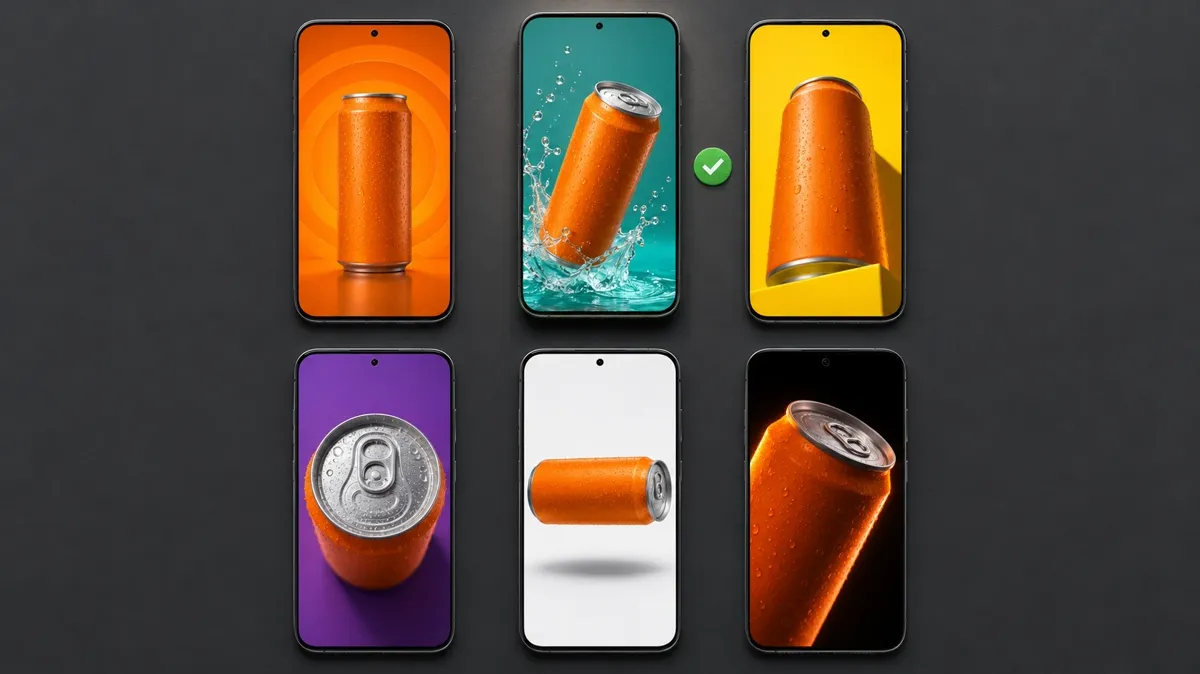
This is the trend with the clearest commercial value. Once the master ad exists, AI makes it cheap to change the hook, the presenter, the language and the shape of the frame. Ad platforms reward advertisers who give them many versions to test, so in 2027 we expect more briefs to ask for a system of versions, not a single film. The risk is volume without an idea: fifty versions of a weak ad are still weak. Start with one strong master, then extend it with an Ad Variant Pack or dubbing.
5. Labels and rules become routine
Regulation has caught up enough that brands need a process, not just good intentions. Three things to know at the time of writing:
- In the EU, the AI Act’s transparency rules began to apply in August 2026, including a duty to disclose realistic AI-generated or manipulated content such as deepfakes.
- In the UK there is no blanket legal duty to label an ad as AI-made. The ASA and CAP have said the existing advertising codes apply in full however an ad is created, so the test is still whether it misleads.
- Meta, TikTok and YouTube each have their own labelling rules for realistic AI content, and they change often.
None of this is legal advice, and the details move, so check the current rules before a campaign goes live. What will not change is the practical answer: keep a record of what was generated. Every ZR Media delivery includes a one page note listing exactly that, which is set out in our AI policy.
6. Faces and voices need paperwork
Digital clones of founders, presenters and brand characters will be normal in 2027, and so will the questions that come with them. Who agreed to this? For how long? In which countries? Expect contracts for a cloned face or voice to look more like model releases, with clear limits. We only clone a real person with written consent, and we expect clients to be asked for proof of that more often.
7. Taste becomes the difference
When everyone has the same models, the output starts to look the same: the same glossy light, the same slow push-in, the same stock-perfect faces. Viewers have learned to spot it and scroll past. Our guess for 2027 is that the ads that stand out will be the ones with a clear idea, real design in the type and motion, and an edit with rhythm. That is the human part, and it is why we describe our work as AI plus a motion designer, not AI alone.
What probably will not change
- A real testimonial still needs a real customer.
- If the ad has to prove how something feels, fits or tastes, film it. We cover the choice in AI ad or real shoot?
- The product on screen must match the product in the box.
- The first three seconds still decide whether the rest is watched.
How to plan a 2027 video budget
- Put the money into the idea and one strong master ad before you buy volume.
- Ask for versions up front: lengths, shapes, hooks and languages, planned together.
- Ask any studio for a written record of what is generated and which tools are licensed.
- Get consent in writing for any real face or voice.
- Keep some budget for testing, and let the results choose the next ad.
If you want to talk through what this means for your brand, a free 15 minute call is enough to sketch a plan for the year. For the basics, start with AI video ads in the UK: a straight guide for brands.